
Forsyth Criminal Court Files
A criminal court record is the court case file, not the first police contact. In Forsyth County, the record begins to take shape when a charge is filed in court through an accusation, indictment, citation, warrant-linked case, or other charging process. The file can include arraignment entries, bond orders, motions, hearing notices, plea forms, jury or bench trial events, verdicts, sentencing orders, probation terms, revocation filings, and jail-calendar entries. Charge detail is part of the record, but the full file is broader than a charge list.
Superior Court handles felony criminal cases in Forsyth County. State Court handles misdemeanors, traffic citations, preliminary hearings, search and arrest warrants, and many related criminal-calendar functions. Magistrate Court can handle initial criminal processes, including warrants, summonses, preliminary hearings, bail where not reserved to another court, and certain misdemeanors. Juvenile Court handles matters involving children and is subject to confidentiality limits. Accountability Court tracks can appear in criminal case history when a defendant is accepted into a treatment-focused court program.
Search Forsyth Criminal Records
The main route for Forsyth County criminal court records is the Clerk's case-search path to re:SearchGA. The Forsyth Clerk Case Search page states that participating users must register before searching cases, and that online document purchasing is available. The portal can help locate Superior Court felony cases and State Court misdemeanor or traffic-criminal cases when those records are available through the participating county system.
- Start with the official Clerk case-search page and select the online case-search route.
- Register or sign in to re:SearchGA, since the Clerk states that registration is required.
- Search by the portal-supported criteria, such as case number or defendant name when available after login.
- Open the case and review the court, case type, charge entries, docket events, plea, disposition, and sentence fields.
- Use GSCCCA eCertification or the Clerk copy request process when an official certified copy is needed.
For a narrower look at how arrest data becomes filed charges, use the court charge record material in Forsyth County arrest records and charges. For a broader civil, probate, traffic, and case-search overview, use the full Forsyth County court records access route.
Forsyth Criminal Case Flow
Criminal case events are best read in sequence. A Forsyth County case may start with arrest, citation, warrant, prosecutor review, indictment, or accusation, then move into court scheduling. The docket may show an arraignment, where the charge and plea are addressed. Later entries can show pretrial motions, discovery-related events, calendar calls, plea hearings, trial settings, verdicts, dismissal entries, sentencing, probation, or revocation. Not every case has every stage.
Case flow: Charges Filed › Arraignment › Pretrial and Motions › Plea or Trial › Disposition › Sentencing
| Stage | What Happens |
|---|---|
| Charges filed | The prosecutor or court process places criminal allegations into a court case through the proper charging document. |
| Arraignment | The defendant is called to answer the charge, and the record may show plea information or waiver activity. |
| Pretrial and motions | Attorneys file requests for court action, and the judge enters orders or schedules hearings. |
| Plea or trial | The case resolves by guilty plea, nolo plea, dismissal, bench trial, jury trial, or another disposition path. |
| Disposition | The docket records the outcome of each charge or the case as a whole. |
| Sentencing | The court enters punishment, probation, fines, custody, programs, or other legal terms after conviction. |
The Forsyth County Drug Court page is the source image for the criminal case program reference below.
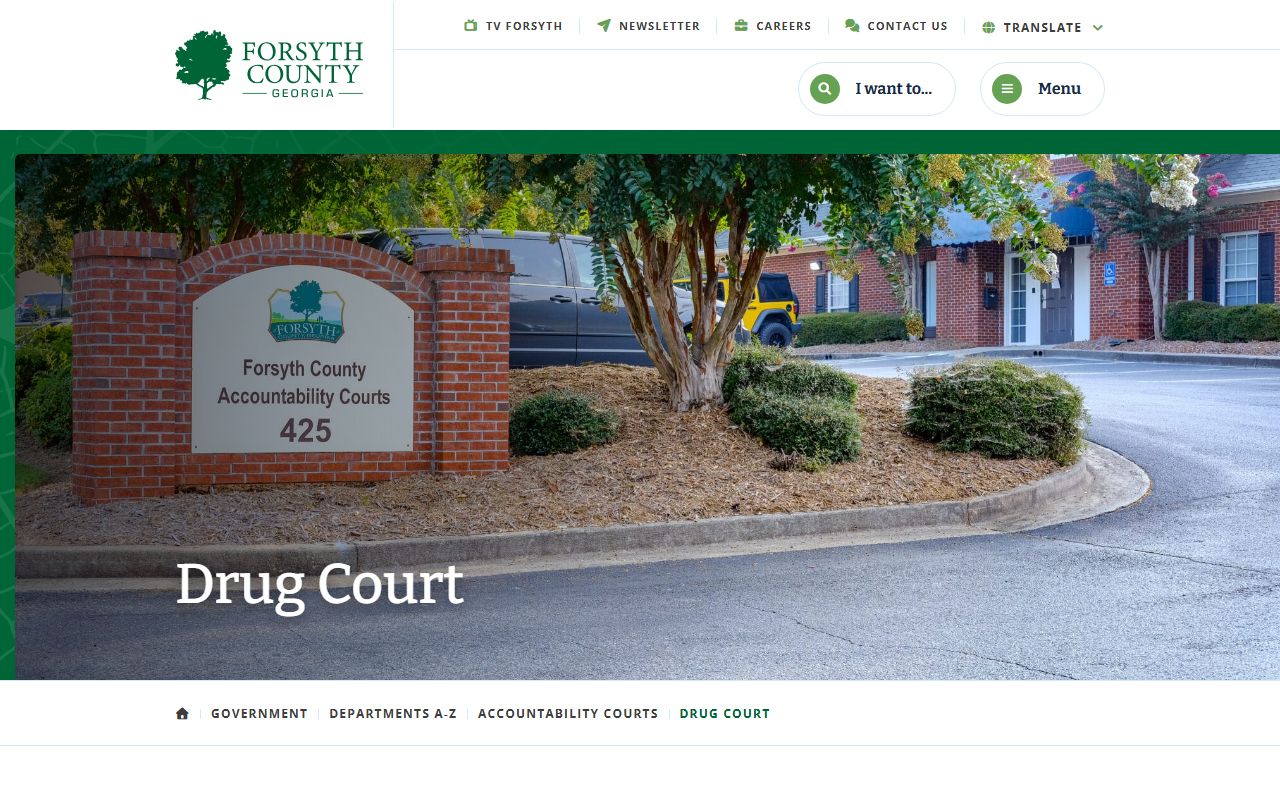
Drug Court can appear as part of a criminal case path when a qualifying defendant is routed into that accountability program.
Forsyth Criminal Record Fields
A Forsyth County criminal court record can show both high-level case details and charge-specific information. The same case may include multiple charges, each with its own status and outcome. Read the docket in order, then compare the final disposition against earlier charge entries. A dismissed charge, an amended accusation, and a conviction should not be treated as the same result.
| Field | What It Shows |
|---|---|
| Case number | The court file number used to search, request copies, and connect docket events. |
| Court | Superior Court for felony matters or State Court for misdemeanors and traffic-criminal cases. |
| Defendant | The person charged in the criminal case, with attorney information when listed. |
| Charge | The alleged offense, code citation if shown, charge status, and any amended or reduced charge entries. |
| Bond | Release terms, bond amount, bond status, or related orders when entered in the case. |
| Plea | The defendant's answer to the charge, such as guilty, not guilty, nolo, or another court-recognized entry. |
| Motions and orders | Requests for court action and judge decisions during the case. |
| Disposition | The outcome, including conviction, dismissal, acquittal, nolle prosequi, or other final action. |
| Sentence | Custody, probation, fines, costs, programs, revocation terms, or other punishment after conviction. |
The Forsyth County DUI Court page is the source image for the DUI Court reference below.
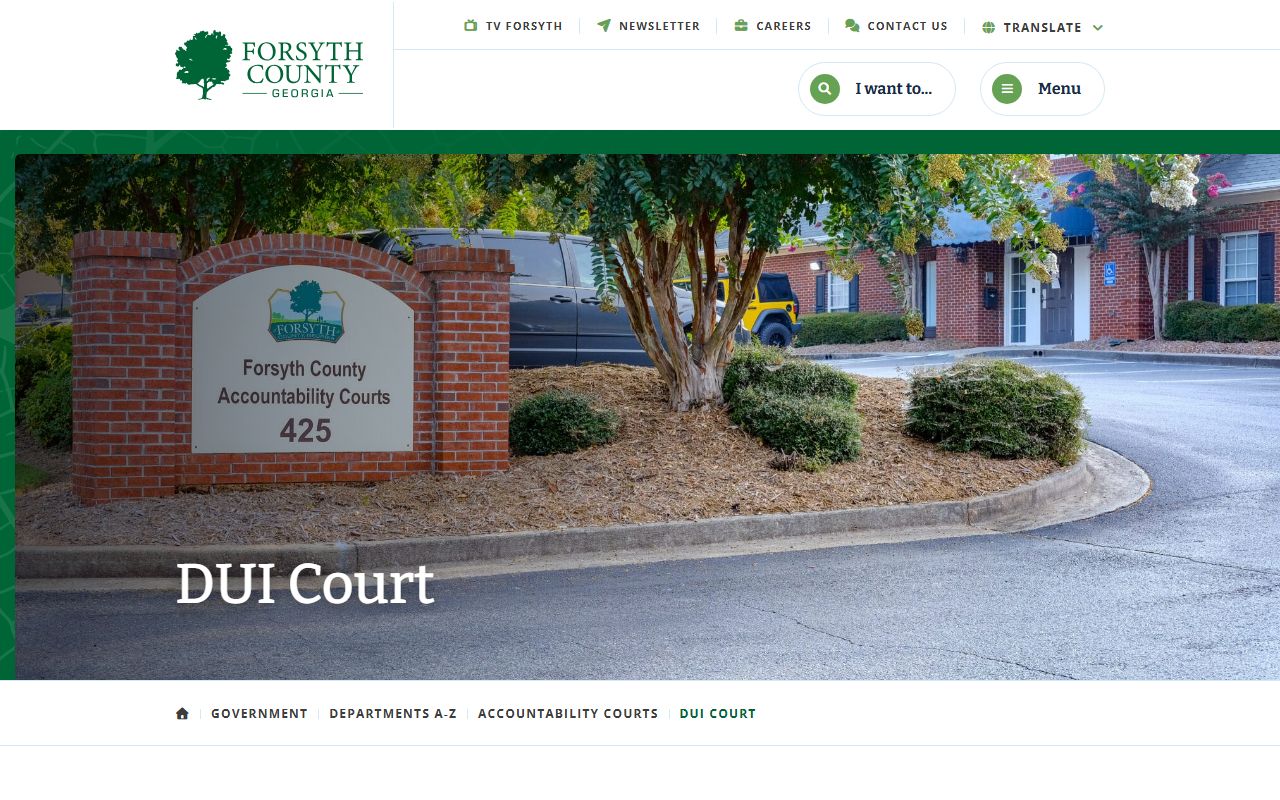
DUI Court records may show status review hearings, testing-related compliance, and program terms when those events are part of the court case.
Charges vs Convictions
A charge is an allegation placed into the court process. A conviction is a final legal outcome after a guilty plea, nolo plea where treated by law, verdict, or other conviction event. Forsyth County criminal court records can show charges that were amended, reduced, dismissed, not prosecuted, or resolved with no conviction. Booking data, warrant data, and charge entries should never be read as proof of guilt by themselves.
| Point | Charge | Conviction |
|---|---|---|
| Meaning | An accusation filed or tracked in the criminal case. | A final outcome that finds or accepts guilt under the law. |
| Where it appears | Charging document, docket, warrant-linked record, citation, or case event. | Disposition, judgment, sentence, plea, or verdict entry. |
| Can change | Yes. It may be amended, reduced, dismissed, or dropped. | Usually changes only through appeal, post-conviction relief, or court correction. |
| Use caution | Does not prove guilt. | Still must be read with sentence, restriction, and appeal status. |
Forsyth Accountability Court Records
Forsyth County Accountability Courts include the CARE Program, Drug Court, and DUI Court. These programs do not replace the criminal case file. They can add program-related docket events, status review hearings, compliance notes, treatment terms, phase progress, sanctions, incentives, and graduation or termination entries when those items are entered into the court record. Access can still be limited if mental-health, treatment, juvenile, or sealed material is involved.
Drug Court is described as a minimum 24-month program with five phases for qualifying offenders, combining court appearances, drug screening, counseling, vocational and educational services, and recovery work. DUI Court is described as an 18-month minimum program with five phases for repeat DUI offenders and high-BAC defendants, including counseling, recovery meetings, random alcohol and drug testing, home searches, and monthly status review hearings. CARE is a mental-health court program for offenders with a documented history of severe and persistent mental illness.
The Forsyth County CARE Program page is the source image for the mental-health court reference below.
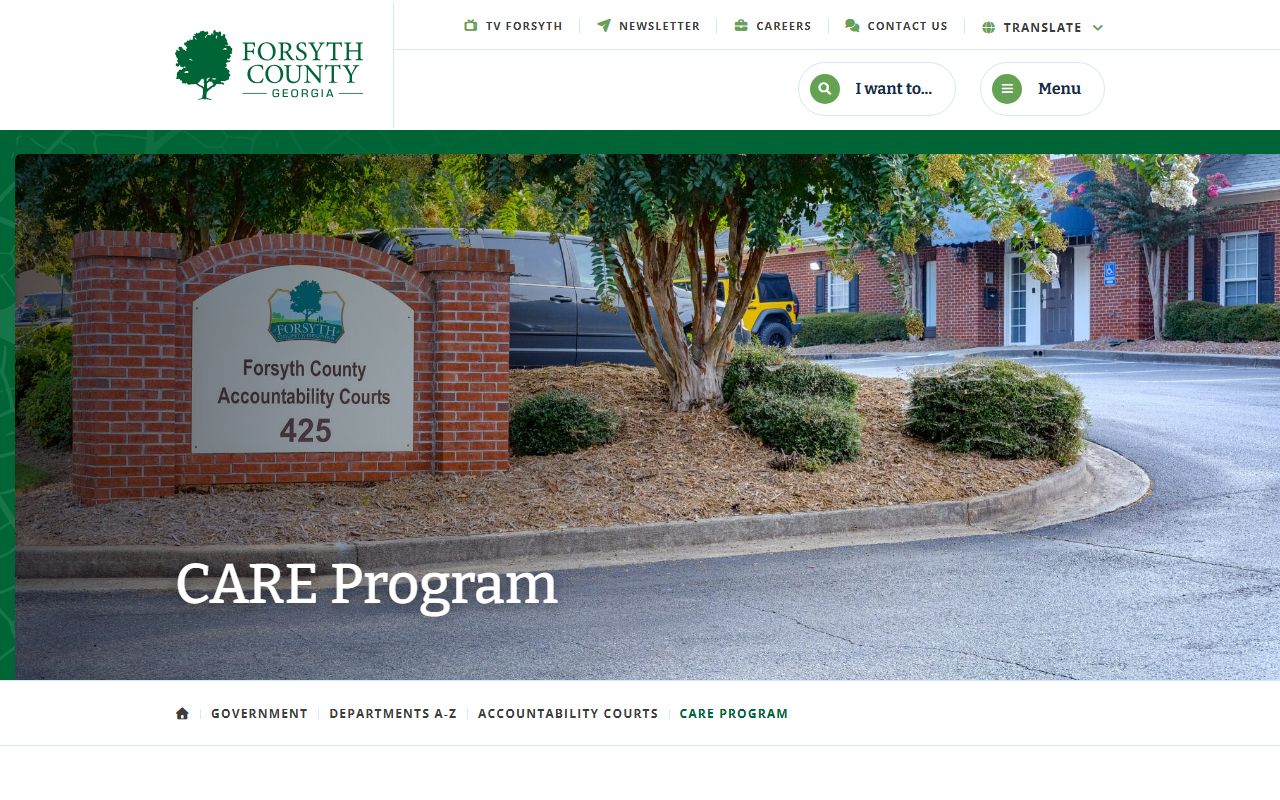
CARE Program entries should be read as court-supervised treatment activity, not as a separate public criminal-history database.
Prosecution and Defense Channels
Forsyth County is in the Bell-Forsyth Judicial Circuit. The District Attorney is Penny Penn, and the DA's office is the felony prosecution office for the circuit. The Solicitor-General's office is part of the misdemeanor prosecution ecosystem and links users to the Clerk, DA, Indigent Defense, Sheriff, and courts. Defendants who cannot afford counsel may use the Forsyth County Indigent Defense Program, which provides appointed attorneys for qualifying cases.
These offices do not replace the Clerk as the custodian of the filed court record. They are important because charging decisions, plea negotiations, victim or witness communication, defense appointments, and some restriction requests can involve the prosecutor or defense channel. If a person already has a lawyer, the DA office may be unable to speak with that person directly about the case.
The Forsyth County District Attorney news item is the source image for the prosecution reference below.
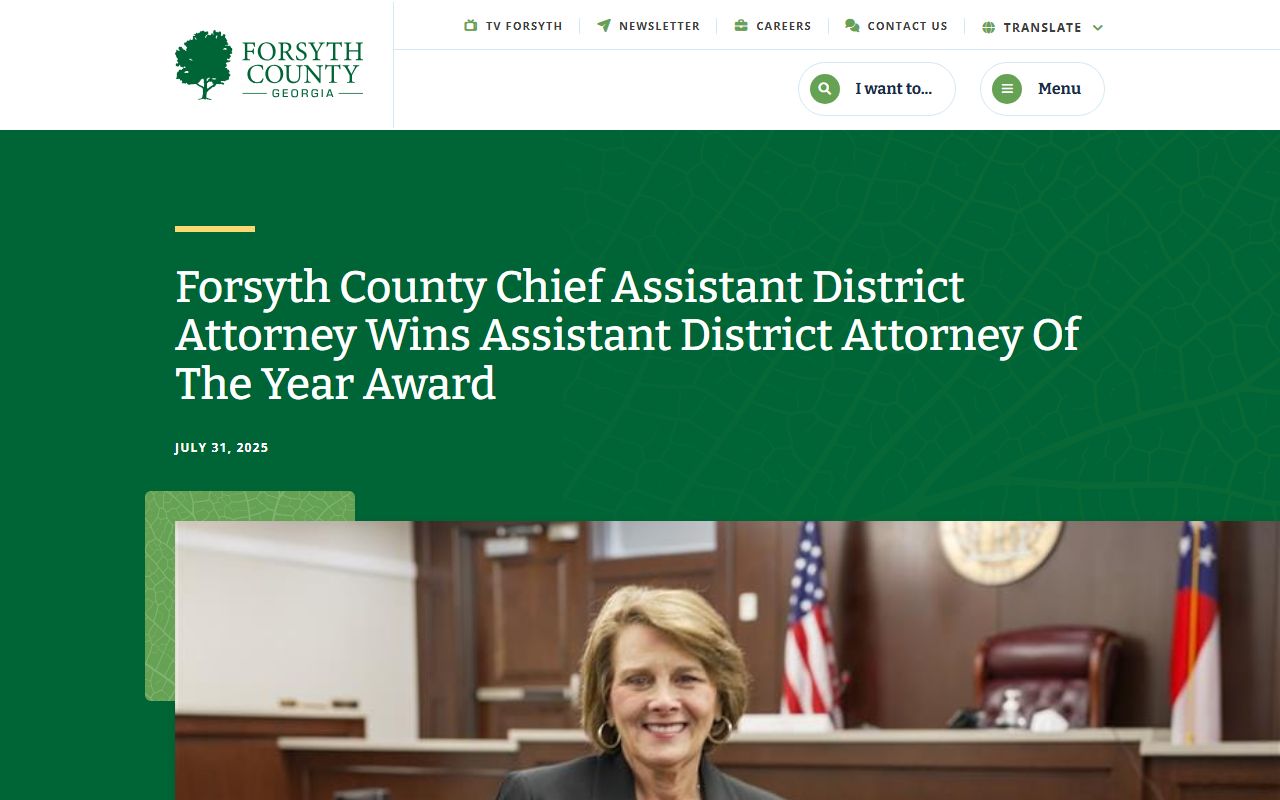
The District Attorney's role affects how felony charges enter and move through the Forsyth County criminal court record.
Sealed vs Restricted Records
Georgia uses specific access terms. A sealed court file is hidden from public access by law or court order. A restricted criminal-history record is limited for non-criminal-justice purposes under O.C.G.A. 35-3-37 when the statutory process applies. The public often says expungement, but Georgia's GBI guidance frames many cases as restriction rather than physical destruction. A court docket, agency criminal-history record, and sheriff booking entry may not all update in the same way at the same time.
| Point | Sealed Record | Restricted Record |
|---|---|---|
| Primary idea | Public court access is blocked by statute or court order. | Criminal-history access is limited for non-criminal-justice purposes. |
| Authority | Uniform Superior Court Rule 21, statute, or case-specific order. | O.C.G.A. 35-3-37 and GBI/prosecutor or arresting-agency process. |
| Who may still see it | Court, parties, attorneys, or others allowed by law or order. | Criminal justice agencies and authorized users may retain access. |
| Forsyth action point | Ask the court or Clerk what order controls access. | Contact the prosecutor for post-July 1, 2013 arrests or the arresting agency for earlier arrests. |
Public Criminal Access Law
Georgia public access law supports access to many adult criminal court records, but it is not absolute. The Georgia Open Records Act, O.C.G.A. 50-18-70 et seq., presumes public records are open unless a law or court order limits access. O.C.G.A. 50-18-71 addresses response, access, and lawful fees. Uniform Superior Court Rule 21 says court records are public unless access is limited by law or through the rule's court-order process.
Restrictions are common in criminal-record work. Juvenile court records are not ordinary public adult records. Adoption, mental-health, sealed, and protected-identifier material can be withheld or redacted. The GBI restriction process can limit access to certain criminal-history entries, but eligibility is not automatic. Certified court copies must still come from the official Clerk route, and the Clerk's copy fee schedule controls copy charges.
Key access point: A Forsyth County criminal court record may be public, partly redacted, sealed, or restricted depending on the case and law.
Criminal Court vs Sheriff Records
The Sheriff's Office can hold booking, jail, wanted-person, warrant-service, incident, and investigation records. Those records can overlap with a criminal case, but they are not the court file. A booking record may show arrest date, charges, bond, court date, arresting agency, booking agency, holding facility, and release details if enabled. The criminal court record shows what was filed, what the judge ordered, how the charge was resolved, and what sentence was imposed.
The Forsyth Sheriff's Criminal Investigations page is the source image for the law-enforcement overlap reference below.
Sheriff records are useful context, but the disposition and sentence must be checked in the Forsyth County criminal court case file.